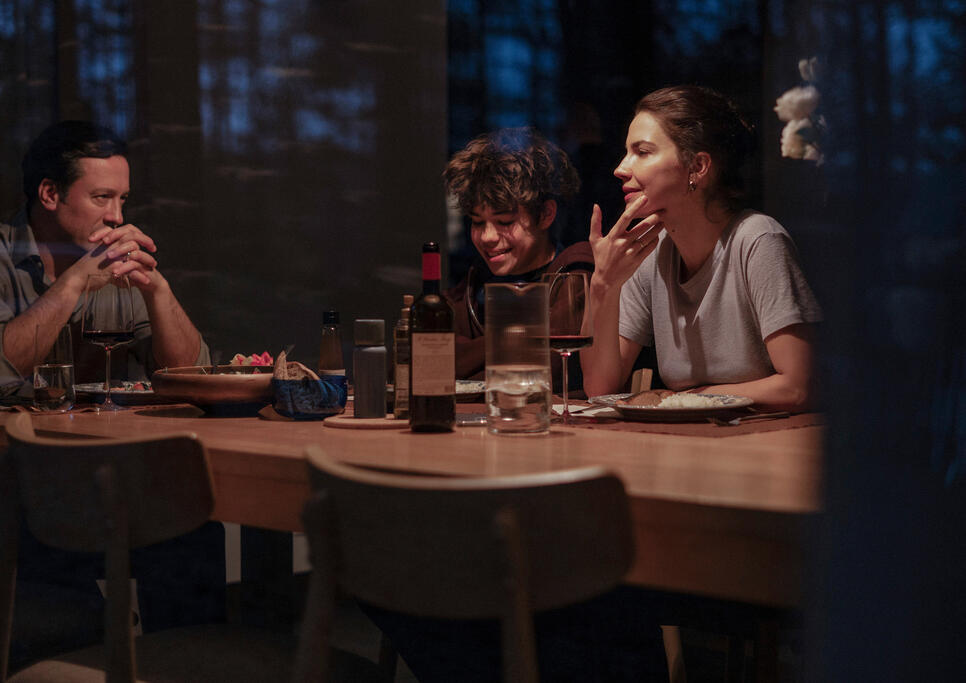
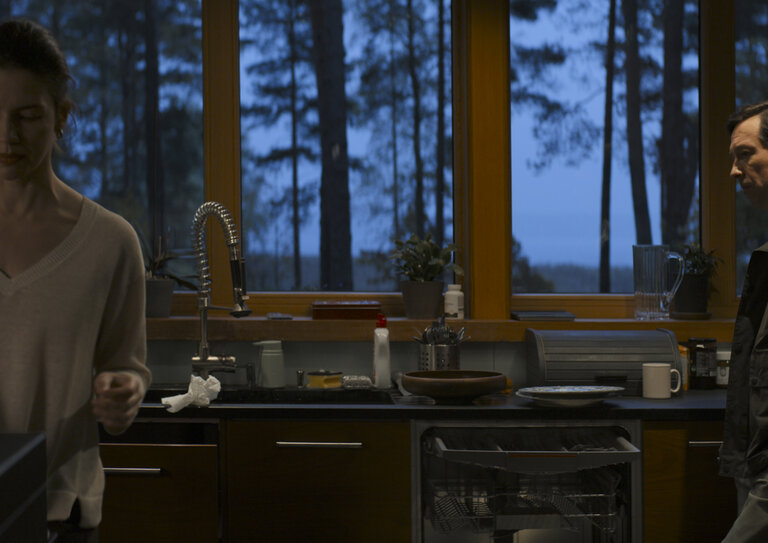
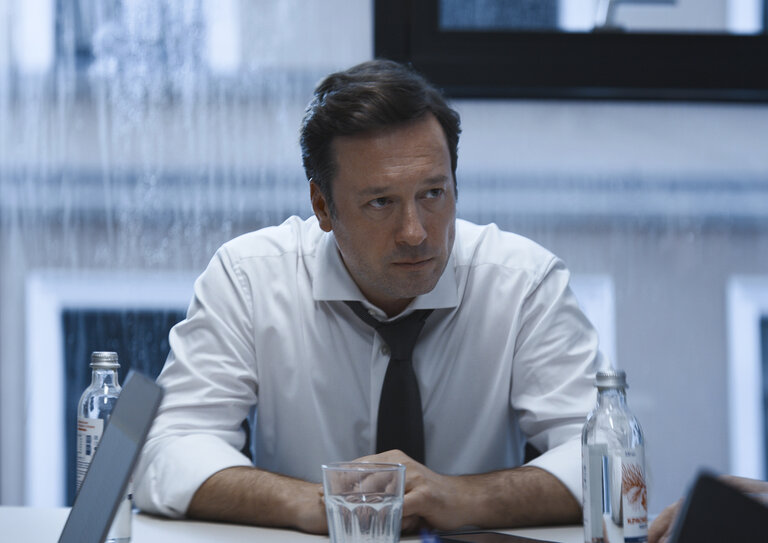
In Minotaur, Andrey Zvyagintsev addresses the war in Ukraine as a backdrop, as a Russian filmmaker who has always been against it. The film is set in 2022, in the context of the Russian invasion of Ukraine. It follows a Russian middle-class family comprising Gleb, Galina, and their son. The family lives in a small town where Gleb owns his own business. Their daily life, as well as that of the people close to them and their compatriots, will be turned upside down as the conflict starts. Some migrate to the West, while others are drafted by the government, including many of Gleb’s employees, which puts his company at risk.
Russia 2022. Successful businessman Gleb (Dmitriy Mazurov) lives in a beautiful waterfront home with his wife Galina (Iris Lebedeva) and their young son. Though politically connected, Gleb is not immune to the radical changes in Russian society and finds himself under extreme pressure to quell panic and keep his company running. Galina meanwhile feels the constant pressure of having to be the perfect wife and mother. When he begins to suspect that Galina is having an affair, the usually considered Gleb makes a fateful decision that will threaten emotional and moral collapse. A Golden Lion winner at Venice for The Return (SFF 2004) and a frequent prize winner at Cannes, Andrey Zvyagintsev (Leviathan, Loveless, Elena) is one of the greats chronicling Russian society over the last two decades. Minotaur is a loose modern remake of Claude Chabrol’s The Unfaithful Wife (1969), reworking its story of marital infidelity into a contemporary Russian setting shaped by political and social collapse. While Chabrol’s original centres on bourgeois suspicion and personal jealousy, the remake expands the narrative into post-2022 Russia, where the Ukraine war, military mobilisation, and corporate pressure form an inescapable backdrop to private life.